




Table of Contents
- Why Integrating SEO and Content Marketing Is Essential for Visibility
- How SEO and Content Marketing Work Together
- Technical SEO: Ensure Your Site Is as Optimized as Possible
- On-Site SEO: Considering Your Target Audience and Creating Content for Them
- Off-Site SEO: The Importance of Backlinks and Establishing Your Authority
- Building Long-Term Value Through SEO and High-Quality Content
Key Takeaways
- Content marketing and SEO are most effective when used together. High-quality, audience-focused content needs SEO to rank, while SEO needs valuable content to satisfy search intent.
- Search engines prioritize content that delivers value. Google’s algorithms reward relevance, authority, and user experience, all of which are built through strategic content marketing.
- Producing content without a distribution and link-building plan limits ROI. Promotion strategies help great content reach its intended audience and earn search credibility.
- Integrating SEO early in the content process sets the stage for success. From ideation to publication, aligning content creation with SEO best practices leads to stronger organic results.
When people need answers, solutions, or recommendations, they turn to search engines like Google and Bing. Whether they’re comparing products, researching services, or trying to solve a problem, most search queries begin with one goal: finding relevant, trustworthy information quickly.
This is where the relationship between SEO and content marketing becomes impossible to ignore. Search engine optimization helps web pages appear in search engine results pages (SERPs), while content marketing focuses on creating valuable content that speaks directly to a target audience’s needs and pain points.
So, does content marketing benefit SEO? Absolutely, but only when content creation is guided by search intent and a clear marketing strategy. In this article, we explore how SEO tactics and content marketing efforts work together to improve user experience, build trust, and help content perform better in organic search.
Why Integrating SEO and Content Marketing Is Essential for Visibility
In years past, the division between SEO and other stages of the content marketing process was thought to be wise. Each was considered to be in its own universe, run by separate departments that might not communicate with each other often.
However, to succeed in creating content that influences and reaches the masses, we have to remember a key principle of digital marketing: search engines are constantly refining their algorithms to prioritize the best content on a given topic query. And there are a variety of factors that help search engines define what’s “best” outside of the traditional, technical SEO realm.
In essence, search engines are trying to provide high-quality answers to the public’s questions. Their algorithms have to determine which sites are authoritative, on-topic, current, reputable, and more. This speaks to the heart of SEO: intentionally optimizing your content so people can search for and find you.

However, you can optimize existing content forever, but if it’s not the best answer to a searcher’s question, it doesn’t stand a chance of rising above the competitive content out there.
The goal of content marketing is to provide value to your clients and your potential customers. It is a type of inbound marketing (meaning people find your SEO content and thus your brand and its products/services) rather than outbound marketing, which involves you actively pitching your products/services to people.

Content marketing covers the production line of creating content that is aimed to satisfy a target audience’s interests, pain points, curiosity, emotions, spending habits, sharing habits, or any other metric you are looking to track.
It could consist of anything from blog posts and white papers to podcasts and video series. And if it’s done right with SEO in mind, it can be a game-changer for your business.
How SEO and Content Marketing Work Together
If content marketing is about providing value to your audience, and SEO is about helping the search engine algorithms determine the value of your content, then it’s clear that content marketing and SEO go hand-in-hand.
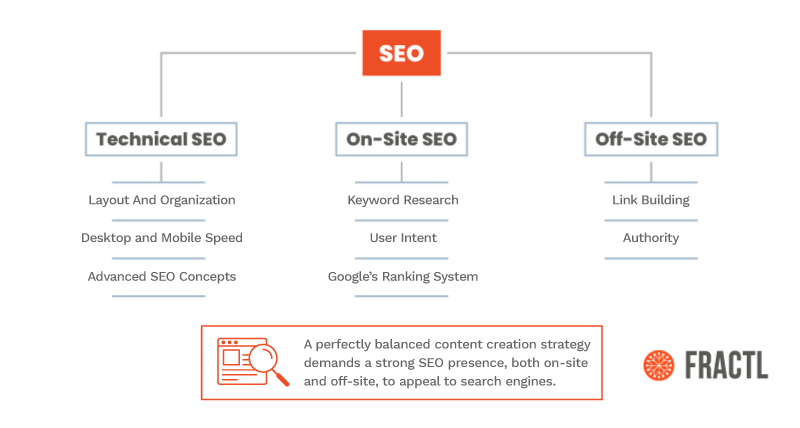
Generally speaking, SEO comprises three elements: technical SEO, on-site SEO, and off-site SEO. Let’s explore how these components bolster content marketing objectives.
Technical SEO: Ensure Your Site Is as Optimized as Possible
If a piece of content is represented by a car, technical SEO is everything under the hood. No matter how many hours you spend designing the perfect body and giving the car a shining paint job, it’s useless if the car doesn’t drive.
In the same way, you must devote time to both the quality and technical proficiency of your site. Factors like page speed, mobile usability, clean site architecture, and secure web pages influence user experience and can impact website traffic, engagement metrics, and search engine rankings for optimized content across organic search results.
Layout and Organization
The first step in developing a technical SEO strategy when creating content is to consider the entire structure and architecture of your website. Simply, does your website have a sensible flow, and is it easy to navigate? Search engines reward websites that are organized, easy to crawl, and built with both users and search engines in mind.
Key technical SEO elements to evaluate include:
- Site structure and navigation. A clear page hierarchy and a well-organized navigation bar help search engines understand how web pages relate to one another and improve overall user experience.
- Internal linking. Pages without internal links can be difficult for Google and other search engines to discover, which may limit their visibility in search engine results pages.
- XML sitemaps. Submitting an XML sitemap helps search engines locate and index important content more efficiently.
- Mobile-first design. With mobile-first indexing now standard, websites must be designed to perform well across devices to support strong search engine rankings.
- Website security. Migrating pages from HTTP to HTTPS improves security, protects users, and signals trustworthiness to search engines.
Desktop and Mobile Speed
As we create great content, we need to consider how the page’s text is read by both people and search engines.
When thinking about page optimizations, consider overall website improvements, such as site speed, to allow people to seamlessly access and navigate your website.
Without a smooth user experience, people will leave pages that don’t fully load in favor of ones that open quickly. Your website must adapt from desktop to mobile with ease, allowing site visitors to move smoothly through your pages and access your product or service information quickly.
Advanced Technical SEO Concepts
The world of SEO is a rabbit hole of concepts that get exponentially more challenging, with some easily digestible for the average internet browser and others that even go over the heads of expert marketers and programmers.
Some examples of the more advanced adjustments you can make to your technical SEO involve adjustments to your robots.txt file, technical site audits, canonical link elements/duplicate content, redirects, and more. These optimizations require a fine-toothed comb through your backend systems, but it is well worth the effort to know your website is operating as smoothly as possible.
On-Site SEO: Considering Your Target Audience and Creating Content for Them
When developing on-site SEO content, start by focusing on your audience. Understanding who they are and what they’re searching for ensures your content delivers value and relevance from the start.
Step 1: Produce great content.
Step 1 – amended: Produce good content that covers topics people are searching for.
During the ideation process of any piece of content, you must ask yourself: Does the content offer real and demonstrable value to your niche or your target community as a whole?
As we mentioned in a previous blog post about SEO and content marketing, the content you’re producing must be relevant to your target audience, or you run the risk of high bounce rates, low organic traffic, and a drop in your search engine rankings.
Your audience will consist of different buyer personas and varying levels of engagement. At Fractl, we segment our audience into sections along a funnel: the top, middle, and bottom of the funnel. Contacts are grouped based on their consideration of hiring us.
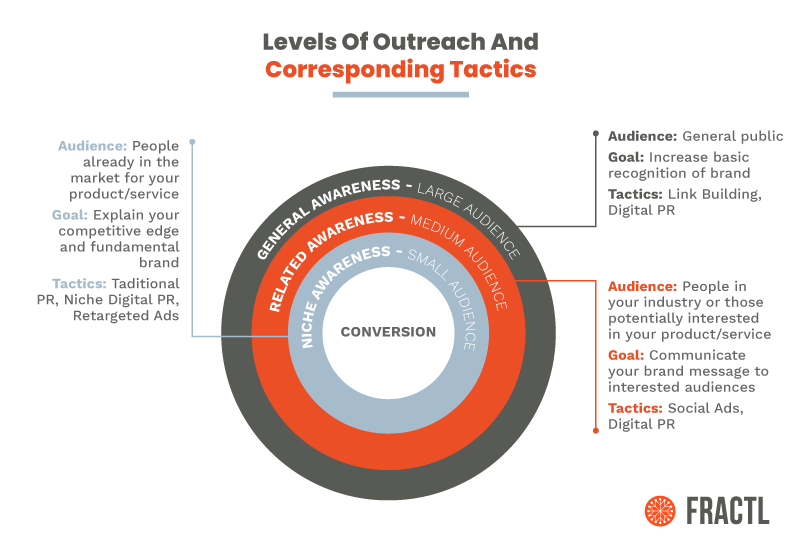
Determining the communities within your audience and understanding what they’re searching for will guide you in the right direction. This breaks down into two topics: user intent and keyword research.
Understanding Search Journeys and Keyword Intent
Understanding what a site visitor has on their mind when they visit your site, what they were thinking about before coming onto your site, and what they are feeling after they leave are all components of determining user intent, or the purpose of someone seeking out a search query.
To figure this out, you can conduct informed keyword research to determine what your target audience is seeking out on Google and how they’re asking those questions, be it long-tail keywords.
Say someone is curious about adopting a healthier lifestyle, and they turn to Google to find some good vegan recipes to try. They start searching for target keywords such as “best vegan recipes” or “easy vegan cooking.” Eventually, they will begin to refine their search, curious about topics such as “one-pot vegan meals” or “overnight vegan oat recipes,” resulting in them landing on a website for a company that sells kitchen supplies and appliances.
Eventually, that same site user may stumble upon more vegan resources linked on those recipe pages, such as vegan cosmetics and clothing, so they explore a variety of brand websites, all representing an opportunity for a sale.
This is a hypothetical user journey spanning a variety of topics, verticals, and websites, all stemming from a single search query.
Think about the potential journeys people can go on to arrive at your product and service, and make a list of all the questions they could have at each step. Then, answer those questions with relevant keywords and high-quality, engaging content.
Google: The Amorphous Ranking System
Google has revealed and confirmed over 200 different ranking signals across a slew of complex algorithms that organize and rank pages for various search queries. It constantly updates its technology with patches to improve the consistency and quality of search results, making it imperative to stay up to date on these changes.
As a result, marketers are constantly testing the algorithm to see which types of content will make an impact, stand out from the competition, and earn top SERP rankings.
Since Google and other search engines are constantly tinkering with the ranking factors that determine these top rankings, staying informed on these changes is extremely important.
Play around with metadata, title tags, subheading text, and more to include key wording and phrases related to your topic. However, don’t go too wild with “keyword stuffing” — Google and readers alike are not fans of text that is over-optimized. And thankfully, Google is getting better and better at recognizing “themes” rather than requiring specific keywords, so please don’t get too keyword-happy. We’ll get more into how to optimize your text conceptually in a bit.
Generally speaking, quality reigns. Produce really good content, and Google will reward that. Beyond simply producing good content, a subjective trait at best, the key ranking factors that Google considers in ranking can be summed up in the following (some of which are Technical SEO tactics we mentioned earlier):
- Content optimizations. This includes metrics such as total word count, quality of copy, post structure, title tags, meta descriptions, URLs, etc.
- Backlinks. Getting high-authority publishers to mention and link to your brand. (We’ll explore this more in the next section.)
- “Mobile First.” Google rewards sites that prioritize mobile compatibility when designing.
- Site optimizations. Technical upgrades such as page speed, strong site architecture, clean code, securing sites with HTTPS, and more.
- Brand awareness. The strength of your brand and its trustworthiness carry weight in Google’s ranking system.
All of these ranking factors will impact how you create content.
On-Site SEO in Action
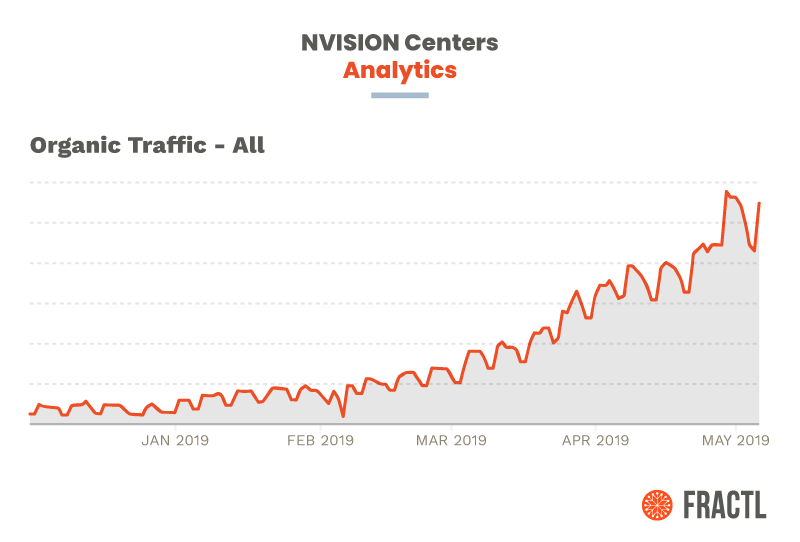
For our client NVision Centers, a California-based LASIK and eye surgery brand, we implemented a content marketing strategy focused on boosting educational content by developing and producing informational pages on eye care and localized pages for each of the surgery chain’s locations. NVision Centers is now poised as a leader in the industry.

Over 100 unique pages were built, covering topics ranging from eye conditions and cataracts to LASIK and beyond. Expanding their content portfolio based on their target audience’s questions led to impressive results.
Off-Site SEO: The Importance of Backlinks and Establishing Your Authority
Giving new content its greatest chance at success involves off-site SEO as well, which refers to external signals (not on your own website) that Google uses to determine whether your content is of high quality.
Backlinks remain one of the strongest signals in off-page SEO because they directly affect search engine rankings and online visibility. When high-quality content earns links from authoritative websites, it supports link-building efforts, increases trustworthiness, and contributes to stronger lead generation from organic traffic.
Link Building
You’ve created a great piece of content that is well-written, rooted in the interests of your target audience, and optimized for SEO throughout the copy.
You may think your job is done, but if you don’t include promotions and link building into your strategy, you may be left with a beautiful piece of content that no one will see. Here are some of the benefits of earning links to your content:
- Greater visibility across the web. Links help your content reach new audiences by placing it in front of people who may not find it through search alone.
- Stronger credibility signals. When relevant websites reference your content, it signals trustworthiness and reinforces your brand’s authority within a topic area.
- More referral traffic. Links can drive qualified visitors directly to your web pages, supporting website traffic beyond organic search.
- Content discovery and longevity. Linked content is more likely to be found, revisited, and referenced over time, extending the lifespan of a single piece of content.
- Support for broader SEO efforts. While links aren’t the sole focus of modern SEO, they still complement on-page SEO, content quality, and user experience.
In light of that, all marketers should be putting resources into link-building marketing campaigns in order to earn the most potential from their high-quality, optimized content.
One practical way to approach this is by analyzing which publishers already cover similar topics and consistently reference external sources. By reviewing competitor backlinks, monitoring media mentions in your niche, and prioritizing outlets with overlapping audiences, marketers can focus outreach efforts on publishers that are more likely to share, reference, or syndicate relevant content.
Authority and Trust Signals
So far, we’ve discussed how content and links are key to a complete SEO strategy. Building great content and a robust link portfolio can help a brand’s authority grow over time as people begin to trust the information they find. While high-quality backlinks remain an important authority signal, they are only one part of a broader picture.
Other signals that contribute to authority and trustworthiness include:
- Engagement across social media platforms. Social media posts, shares, and mentions help extend the reach of relevant content.
- Positive user experience signals. Pages that are easy to navigate, load quickly, and match search intent tend to perform better, supporting authority through stronger engagement and lower bounce rates.
- Reviews and third-party validation. Mentions, reviews, and references from reputable sources reinforce trustworthiness.
- Brand visibility beyond organic search. Authority is reinforced when content appears across digital marketing channels such as email marketing, social platforms, podcasts, and case studies, increasing overall online visibility.
- Content performance signals. Metrics like organic traffic, website traffic growth, and conversion rates help indicate whether content is effectively reaching and serving its intended audience.
Porch Case Study: How Off-Site SEO Builds Authority
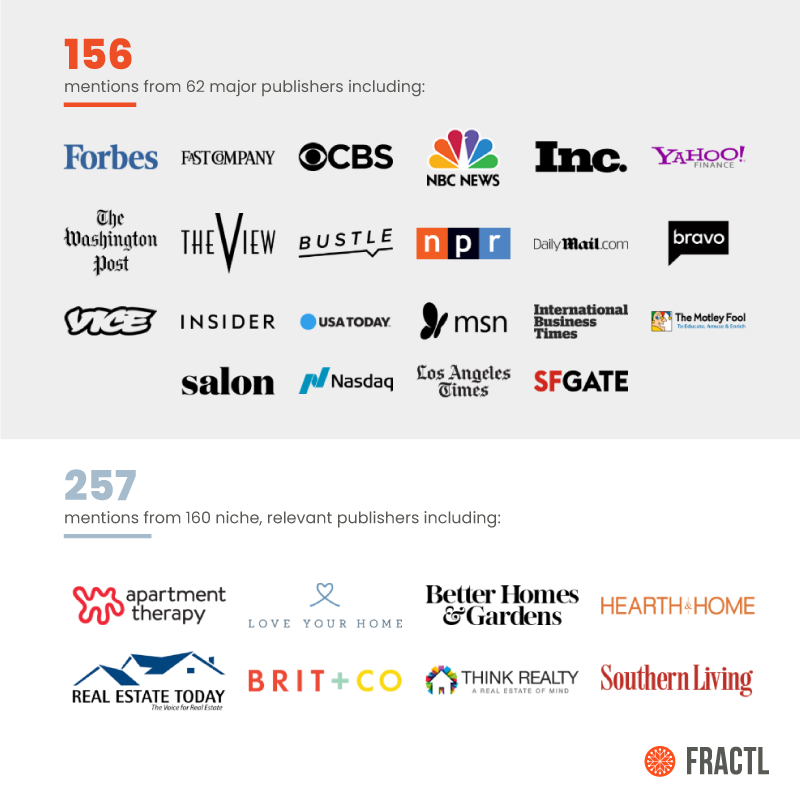
Building authority is key to our clients’ goals. When working with Porch, a leading home improvement marketplace that connects homeowners with contractors, we created content projects that engaged relevant and general audiences, resulting in major media mentions and coverage from top home-related blogs and websites.
The impact of this off-site SEO and content promotion approach was reflected in measurable growth across multiple channels. Porch saw more than 23,000 additional monthly organic visitors, driven by increased visibility and broader distribution of its content. The campaign earned 931 unique linking domains, including over 400 high-authority links (DA 70+), alongside nearly 38,000 social shares.
Building Long-Term Value Through SEO and High-Quality Content
Content marketing and SEO are most effective when they work together as part of a cohesive strategy. From keyword research and search intent to content creation, promotion, and authority signals, each element plays a role in helping content get discovered, trusted, and revisited over time.
At Fractl, we create content designed to be shared, whether it’s through social media, guest posting, branded media mentions, natural syndication, and more. This sharing is built to attract people and gain traction.
If you’re ready to build a content marketing strategy that supports visibility, trust, and long-term performance, explore how Fractl can help you create content that earns attention and drives meaningful results.