
If you want to earn media coverage in the United Kingdom, a press mention isn’t enough — the real goal is to build brand awareness that drives search rankings and connects with potential customers. For in-house marketing teams and PR professionals alike, the U.K. media presents unique opportunities and challenges that demand a tailored approach.
This article distills advice from U.K. journalists, shares best practices for digital PR campaigns, and explores what makes a compelling pitch. Whether you’re trying to build trust with media relations or fine-tune your outreach, these strategies will help you capture attention in one of the world’s most competitive media markets.
Why UK Earned Media Is Critical for Brand Growth
Earned media placements are mentions or features you don’t pay for. They validate your brand through third-party endorsement, and they’re often seen as more credible than paid media. Because of that credibility, earned media plays a pivotal role in amplifying digital marketing strategies.
How Earned Media Fits Into Your Broader Marketing Strategy
Unlike owned media (e.g., blogs and social media accounts) and paid media (e.g., ads and sponsored posts), earned media requires relationship-building and compelling stories. It fuels brand awareness, supports search engine optimization (SEO), and reinforces your brand’s credibility through unbiased exposure.
Why PR Pros Must Adapt Their Approach for UK Media Channels
U.K. journalists value relevance, timing, and simplicity. Outreach efforts that fail to consider local preferences or pitch stories that don’t align with a publication’s scope are unlikely to succeed. In-house teams that tailor messaging by region, supported by data and user experience insights, consistently perform better.
What UK Journalists Really Want
Earning media coverage in the U.K. requires more than just a compelling story. Specifically, it demands a pitch tailored to the specific preferences and expectations of journalists in the United Kingdom. To better understand how to break through the noise, Fractl surveyed 25 journalists and editors working at top U.K. outlets.
Their responses offer candid, firsthand insight into what makes a pitch worth reading — or what lands it in the trash. If your goal is to earn placements in outlets like The Guardian, The Telegraph, or Metro, here’s what journalists say you need to know:
“It’s probably not worth your time or mine if you can’t name the main story areas I cover.”
— Guardian staff writer
Tip: Know the journalist’s beat, tone, and preferred content before pitching.
“Please make sure it’s a story you could explain in a sentence or less.”
— Travel editor, The Telegraph
Tip: Keep pitches short, specific, and easy to understand.
“If I haven’t responded, it means that the pitch is not of interest.”
— Metro writer
Tip: Respect inboxes. Knowing when not to follow up is as important as knowing when to.
Best Practices for Earning UK Media Coverage
To successfully earn media coverage in the U.K., PR professionals must do more than just send out mass emails. Journalists want relevant, timely, and valuable content that fits their audience and beats. These best practices will help your pitches rise above the noise by using social platforms strategically, nurturing relationships with media contacts, and delivering assets that make stories stronger and easier to publish.
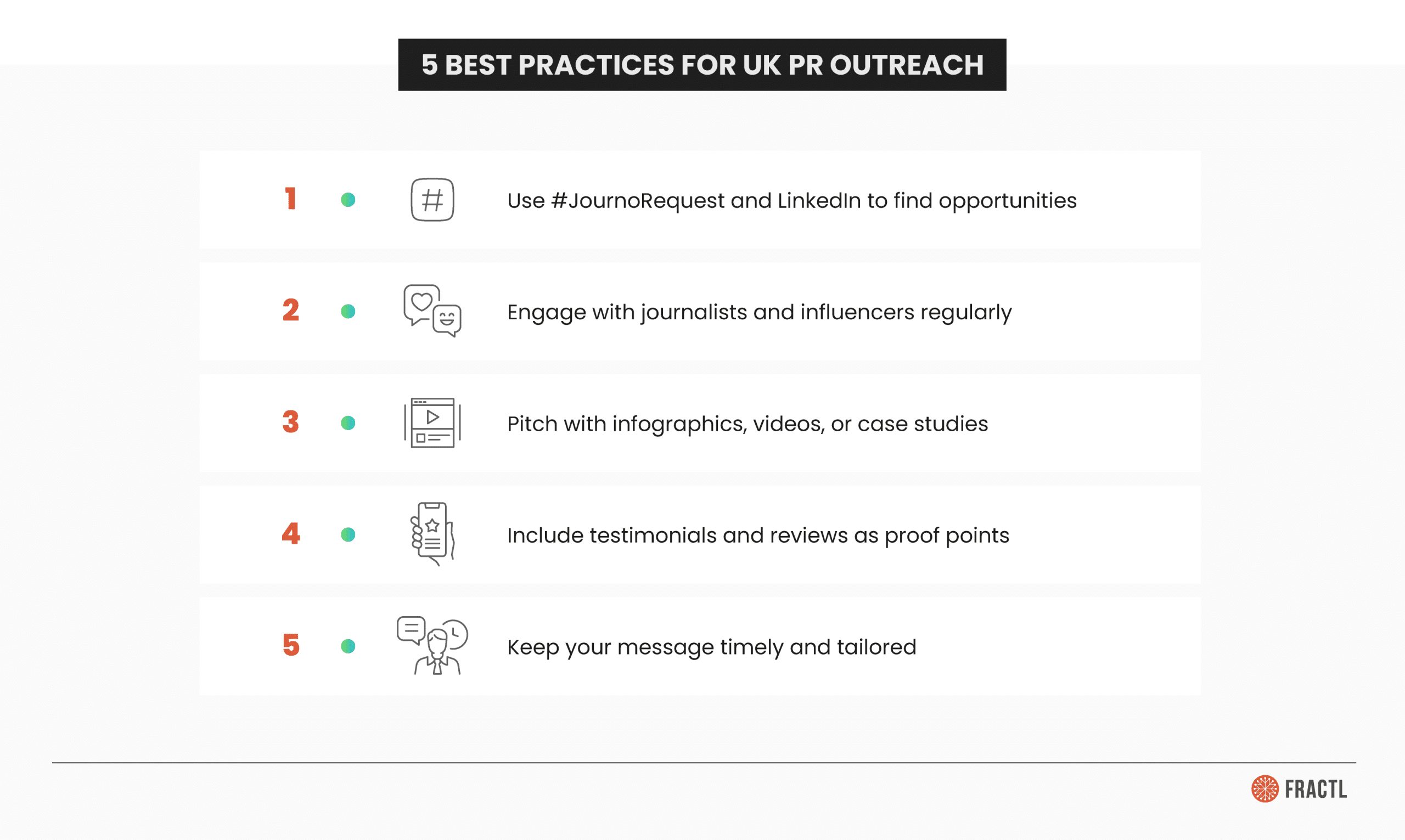
Use Social Media Platforms and Hashtags for Real-Time Media Opportunities
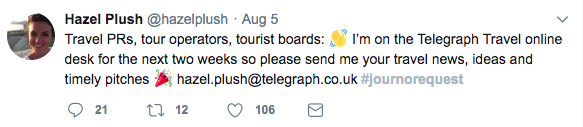
Hashtags on X help journalists seeking sources (e.g., the #JournoRequest tag). LinkedIn can reveal shared connections and provide context on what topics they typically cover. Monitoring social media conversations also allows you to spot timely opportunities and tailor your outreach to trending news or emerging stories.
Build Relationships With Media Outlets, Bloggers, and Influencers
Earned media doesn’t happen in a vacuum. Strong partnerships and consistent engagement with content creators, influencers, and journalists pave the way for long-term visibility. Invest time in genuine connections that can lead to recurring opportunities, organic endorsements, and increased brand credibility across multiple media channels.
Offer Compelling Stories and Visual Assets
Infographics, video content, user-generated content, and case studies offer tangible value to journalists. They also serve as visual hooks that make your pitch more shareable across digital media. The more engaging and easy-to-use your assets are, the more likely they are to be featured in a news story or repurposed across multiple media platforms.
Provide Social Proof and Customer Validation
Incorporate award-winning campaigns, endorsements, review site feedback, testimonials, and customer reviews. These lend credibility to your pitch and show real-world impact. Highlighting authentic feedback and measurable results helps journalists see the broader relevance and trustworthiness of your story.
Building a UK-Focused Earned Media Strategy
A strong earned media strategy isn’t about more than outreach — it’s also about intention. To succeed in the U.K. market, it’s important to align your media efforts with your brand’s broader marketing goals by targeting the right audience directly and supporting your strategy with measurable outcomes.
This section breaks down how to tailor your approach for U.K. journalists while staying consistent with your in-house priorities and using data to guide your decisions.
Personalize Journalism Outreach by Topic and Publication
Generic press releases rarely earn coverage. Use insights from SEO tools and LinkedIn to personalize messages based on the journalist’s recent stories, audience, and preferred formats. This extra step shows you’ve done your homework — and it increases the chances journalists will open, read, and consider your pitch.
Integrate Metrics To Measure Success
Tools like BuzzSumo, Ahrefs, and Google Analytics help you track backlinks, referral traffic, and social media mentions — all indicators of successful media campaigns. Monitoring these metrics regularly allows you to refine your outreach tactics and demonstrate ROI to internal stakeholders.
Align Messaging With In-House Priorities
Make sure earned media efforts align with your internal content marketing goals. Collaborate across departments so that brand voice, timing, and messaging are consistent across media channels. This alignment ensures that every media placement reinforces your broader marketing strategy and resonates with your target audience.
Common Mistakes That Sabotage Media Outreach
Even well-intentioned PR professionals risk failure when they overlook common outreach mistakes. U.K. journalists are quick to dismiss pitches that feel lazy, irrelevant, or overly promotional.
To improve your success rate and protect your brand’s reputation, suppress habits that can derail your earned media strategy before you hit send. Some of those habits include:
- Pitching irrelevant or misaligned topics. If your pitch doesn’t relate to the journalist’s beat or a newsworthy angle, it won’t gain traction. It may even damage future chances. Research the journalist’s recent work, and tailor your angle to show you understand their audience and coverage priorities.
- Overloading your pitch with jargon or fluff. Skip buzzwords and vague claims. Journalists want facts, clarity, and actionable data. Overcomplicating your message only adds friction, so keep your pitch focused, concise, and easy to digest at a glance.
- Automating too much of your outreach. Relying solely on templates or automated follow-ups makes pitches feel impersonal. Personal connection remains central to media relations. Small touches — such as referencing a recent article or customizing the subject line — can make a significant difference.
Content Formats That Appeal to UK Journalists
U.K. journalists look for content that adds value, fits their format, and engages their readers. To increase your chances of receiving media coverage, pitch stories packaged in ways that make their job easier. From expert-driven podcasts to award-winning campaigns and visually rich assets, the right content in the right format can elevate your pitch and strengthen your brand’s media presence.
Thought Leadership and Expert-Driven Content
Podcasts, webinars, and long-form expert commentary establish authority and provide quotable material. Journalists often rely on expert insights that add depth to their stories — this type of content can be critical for securing mentions and getting interview invitations.
Award-Winning Campaigns and Endorsements
Highlight accolades, awards, and partnerships with credible sources or influencers to demonstrate impact. These recognitions serve as third-party validation, helping your brand stand out as trustworthy and newsworthy.
Visual Content That Supports Storytelling
Infographics, videos, and user-generated content boost shareability and give media outlets assets they can embed directly. Visuals also help distill complex information into engaging, easy-to-understand formats that resonate with a wider audience.
Turning Smart Outreach Into Press Coverage That Performs
To rank higher in the search engine results pages (SERPs) and earn attention from U.K. online publishers, your strategy must go beyond sending press releases. By building trust, offering value, and engaging meaningfully with media outlets, PR and marketing teams can secure high-quality, cost-effective coverage that drives SEO, increases brand awareness, and effectively reaches the target audience.
Methodology
Fractl surveyed 25 journalists, editors, and bloggers working with U.K.-based digital publications. Respondents were asked about their email pitch preferences, outreach pet peeves, and content formats they find most useful. Responses were collected and edited for grammar and clarity.